Rest Is Best: Why Taking Time to Rest Matters and How to Give Yourself Permission to Rest
Do you ever feel like there’s never enough time to simply be? Life constantly pulls us in different directions. Whether it’s work, family, or yet another round of dishes, the chance to truly rest and recharge can feel out of reach. No matter how many planners we fill or to-do lists we write, the tasks never really end, do they? The world will always demand our time and energy.
If we want moments to slow down and just exist, we have to make them a priority. Rest isn’t something we squeeze in when everything else is done. It’s something we intentionally choose. When we make time to rest, we’re not being lazy—we’re refueling. Without it, we’re running on empty, waiting for the inevitable burnout. Taking care of ourselves means honoring our need to pause, breathe, and recharge. Let’s give ourselves permission to rest.
In a world that glorifies being busy, it’s easy to feel guilty for slowing down. But rest isn’t laziness. It’s essential. This week, let’s embrace the affirmation:
✨
I give myself permission to rest and recharge.
✨

Permission to Rest: Taking Time to Rest Through A Creative Journaling Prompt
Let’s tap into our creativity and design our own permission slip. As adults, we don’t need a teacher’s approval to take a break—but sometimes, we need a reminder that rest is valid and guilt-free. Give yourself full permission to pause, recharge, and prioritize your well-being.
Create your very own permission slip to rest—because guess what? You’re the boss now! Grab your favorite colors, doodle to your heart’s content, and make it as fun or fancy as you like. Let this be your official, guilt-free pass to unwind and recharge! 💖✨
Inside My Sketchbook
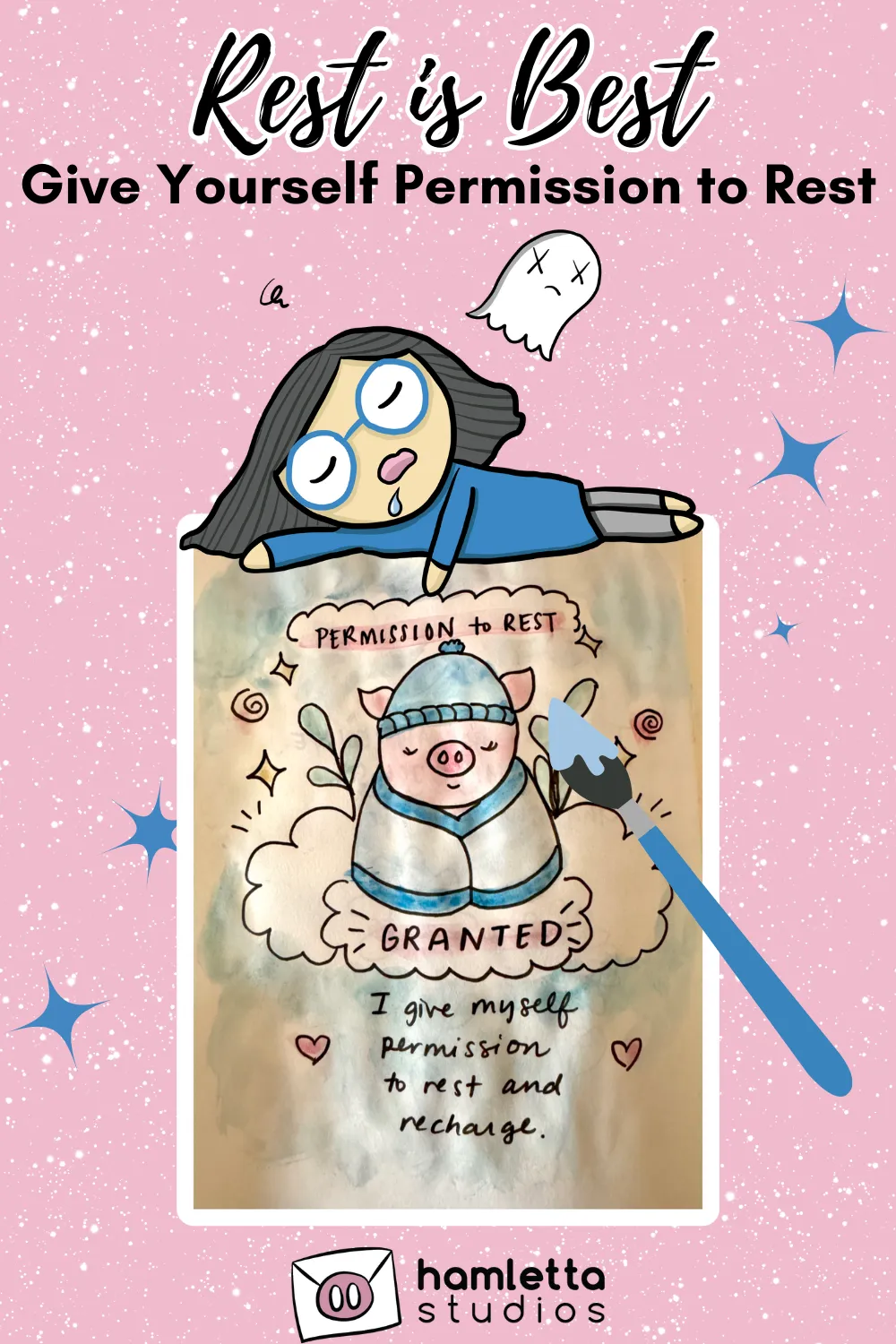
I doodled a little pig in my sketchbook and wrote, "Permission to Rest— Granted." I added this week’s affirmation to remind myself that I’m the one who decides if I get rest, and it’s up to me to give myself permission to recharge.

Journal Prompts for Rest & Reflection
Reflecting on your rest habits through journaling can provide valuable insights into your well-being. Consider exploring prompts such as:
What does rest look and feel like for me? How can I create more opportunities to rest in my daily life?
What activities, spaces, or moments make me feel recharged? How can I prioritize these?
Are there any beliefs or habits that make me feel guilty about resting? How can I challenge those thoughts?
What stops me from resting, and how can I change that?
How do I know when I need to recharge? Are there specific signs my body gives me when I need rest?
What activities make me feel truly rested?
How do I typically respond to feelings of fatigue or burnout?
What changes can I make to incorporate more rest into my daily routine?
By thinking through these questions, you'll gain a better understanding of your rest needs and find simple ways to meet them.

Why Rest is Important
It is so easy to push off rest and say I need to do x, y and z and that there’s no time to slow down and simply be, but it is critical to both our physical and mental health to get adequate rest. It enhances our focus and memory and supports our emotional well-being. Chronic sleep deprivation can lead to serious health issues, including cardiovascular disease, diabetes, and weakened immune functions. Even short-term sleep loss can impair judgment, mood, and learning abilities. Prioritizing rest is not a luxury but a necessity for optimal health and performance.

Recognizing the Need for Rest
How do we recognize when we're not getting enough rest? You might notice irritability, trouble focusing, or a lack of motivation. Ignoring these signs can heighten stress and lead to burnout. Society often pushes the idea that rest is lazy or unproductive, making it feel counterintuitive to slow down. But it’s time to unlearn that mindset and start listening to your body. Prioritizing rest can help prevent physical and mental exhaustion before it takes a toll.
Giving Yourself Permission to Rest
Society has drilled into us the idea that our worth is tied to constant productivity, making rest feel like a luxury instead of a necessity. But the truth is, rest isn’t an indulgence, it is essential for our well-being. To break free from productivity guilt, we can start by setting realistic daily goals, embracing the value of downtime, and practicing self-compassion. Rest isn’t something we have to earn; it is something we all deserve. Allowing yourself to rest without feeling guilty helps recharge your energy and can actually boost your productivity and happiness.
Types of Rest
Understanding the various forms of rest can help address specific areas of fatigue and promote overall well-being. Dr. Saundra Dalton-Smith identifies seven types of rest:
explore how different types of rest can enhance your well-being. art and life balance
Physical Rest: This includes both passive rest, like sleeping and napping, and active rest, such as yoga or stretching, which improve circulation and flexibility.
Mental Rest: Taking short breaks throughout the day can help alleviate mental fatigue and enhance concentration. Examples: Meditation, mindfulness, screen breaks.
Emotional Rest: This involves the freedom to express your feelings openly and setting boundaries to avoid people-pleasing behaviors. Examples: Talking to a friend, journaling, setting boundaries.
Sensory Rest: Reducing sensory input, such as dimming lights and turning off electronic devices, can help counteract sensory overload. Examples: Reducing noise, taking a break from screens and overstimulation.
Creative Rest: Engaging with nature or appreciating art can reawaken your sense of wonder and inspiration.
Social Rest: Prioritizing time with supportive individuals and minimizing interactions that drain energy can provide social rest.
Spiritual Rest: Connecting with something greater than yourself, whether through faith, community involvement, or meditation, can offer spiritual rejuvenation. Examples: Engaging in hobbies without pressure, consuming inspiring content.
By identifying which type of rest you lack, you can take intentional steps to restore balance and improve your overall health.
How to Intentionally Make Time for Rest
Making time for rest in a busy schedule takes a little planning and effort. Start by looking at your daily routine and finding moments where you can fit in short breaks. For example, a quick walk without any screen time can give your mind and senses a nice break.
Taking a few minutes each day to practice mindfulness or meditation can really help clear your mind and help you relax.
Treating these activities like important appointments in your calendar can make sure rest becomes a regular part of your day.
Just remember, it’s not about how much time you spend resting, but about the quality of the activities that recharge your mind and body.

Rest and Productivity: Finding Balance
Balancing rest and productivity is key for long-term well-being and efficiency. Taking regular breaks, like with the Pomodoro method (working in focused intervals with short breaks), can boost focus and prevent burnout.
Seeing rest as part of your work strategy, not a roadblock, can improve both performance and mental health. Even the most successful people know that rest is essential for staying creative, energized, and healthy.
Encouraging Rest Through Self-Care Practices
Taking time for self-care that helps you rest can really improve your quality of life. Setting up a bedtime routine with things like reading or stretching can help your body know it’s time to relax, leading to better sleep. Creating a calm space by cutting down on noise and screen time before bed also helps. Doing hobbies just for fun, with no pressure or deadlines, lets you rest creatively and recharge. By making these self-care habits a priority, you're showing love to your body and boosting your well-being.
Remember, rest isn’t a luxury—it’s a necessity for both your mental and physical well-being. By embracing rest as a vital part of your routine, you give yourself the space to recharge, get creative, and show up as your best self. So, whether it's through mindful breaks, a relaxing evening routine, or simply stepping away from the hustle, make rest a priority in your life. Your body, mind, and spirit will thank you.